

Emergency lighting is a crucial part of any building’s safety system, ensuring that occupants can safely evacuate during power outages or emergencies. This guide provides an overview of the types, maintenance, and importance of emergency lights.
Types of Emergency Lighting
Common types of emergency lights include:
- Oyster Light
- Spitfire
- Baton
- Exit Light
- Test Point
Modern emergency lights often use LED technology. This offers a longer lifespan and greater energy efficiency compared to traditional incandescent or fluorescent lamps. These lights come with a backup battery, either within the light body or in the ceiling, to ensure they remain operational during power failures.
Identifying Emergency Lights
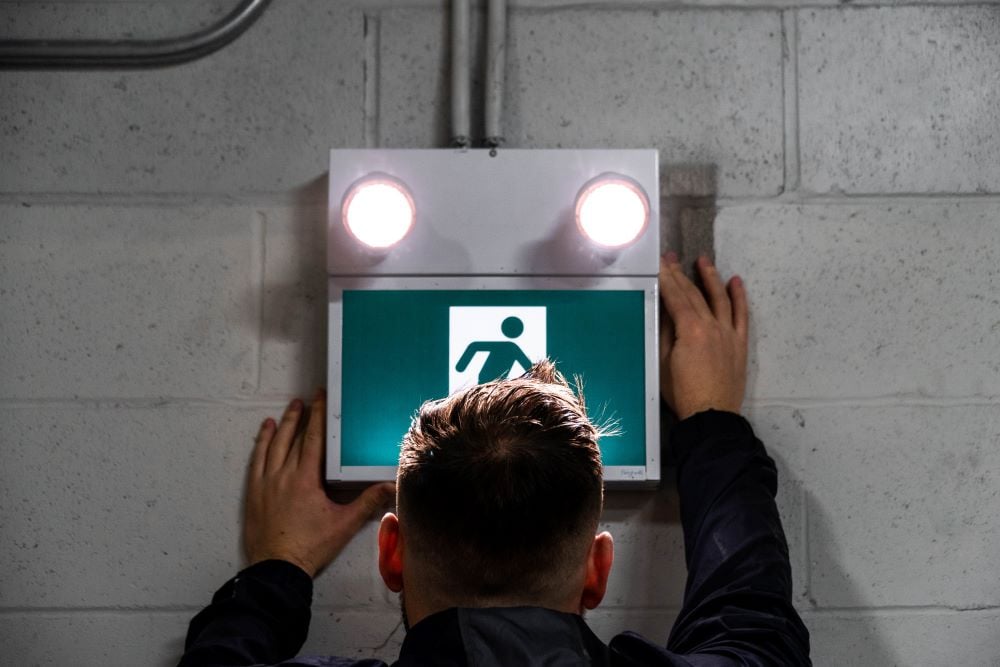
Emergency lights can be identified by:
- The emergency light symbol
- A test button
- A red LED (charging light)
Testing Emergency Lights
Australian Standards require that exit and emergency lights undergo testing every six months. This involves a discharge test. This is where the power supply is interrupted to check if the lights remain illuminated for at least 90 minutes on battery power. This duration is crucial as it provides enough time for building occupants to evacuate safely during an emergency.
Circuit Separation
In buildings constructed from the late 1990s onwards, emergency lights should be on their own circuit with a dedicated test point. If emergency lights share a circuit with other services like house lights, garage doors, or internet, these services suffer during emergency lighting tests.
Lifespan of Emergency Lighting
Emergency lights generally have a shorter lifespan than non-emergency lights due to their more complex circuitry, which includes a charger, battery, and additional components. The constant charging of the battery generates heat, leading to potential component failure. On average, a quality emergency light fitting should last between 6 to 8 years. Investing in high-quality emergency lights can save money in the long run,. Cheaper options may require more frequent replacements.
Repairing Emergency Lights
Emergency lighting can be repaired, replaced, or installed by any licensed electrician. However, an Accredited Practitioner (Fire Safety) is required to endorse emergency and/or exit lights on the Annual Fire Safety Statement (AFSS).
In conclusion, emergency lights are a critical safety feature in any building. Regular testing, proper maintenance, and using high-quality fittings ensure that these lights function correctly when needed most. For more detailed information and professional advice, consider consulting with RedMen, your trusted experts in fire safety and emergency lighting.
REDMEN: your emergency lighting solution provider
REDMEN Fire Protection Management is a NSW based fire protection provider and we know the industry inside and out. With offices in Sydney, Newcastle and the NSW Central Coast, we have hundreds of years of combined experience in fire protection. We have tracked the evolution of fire standards and legislation, and even been instrumental in their development.
Our expert emergency lighting staff will provide a free review to make sure that you are compliant with best practice. Just contact us today and we can set up an appointment today and we will be able to set your mind at ease.


